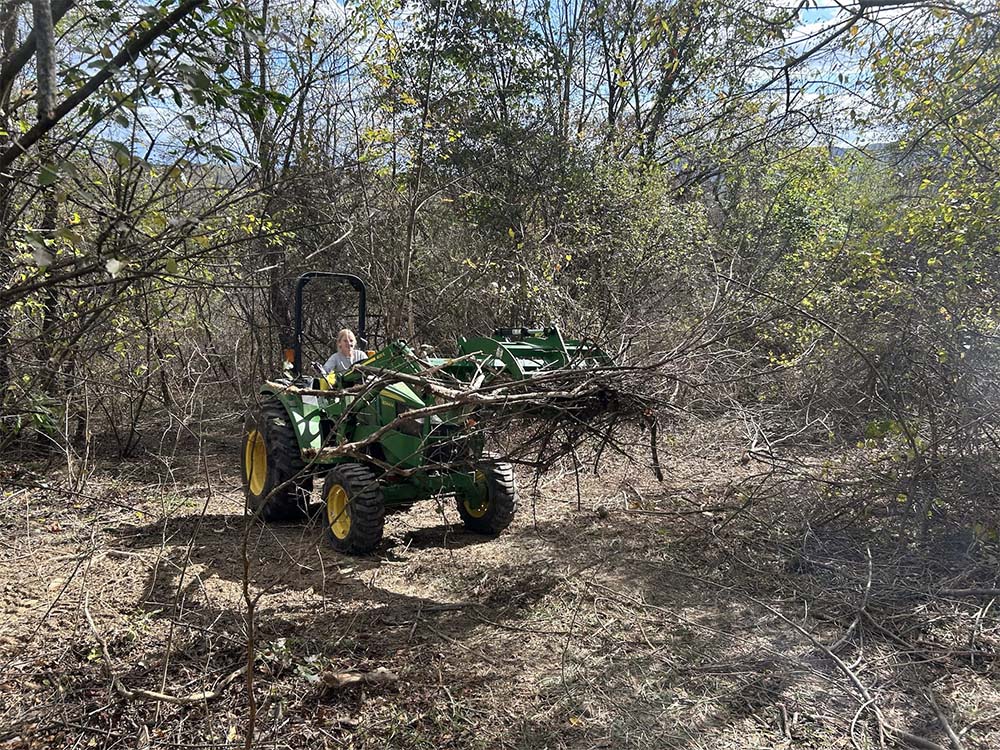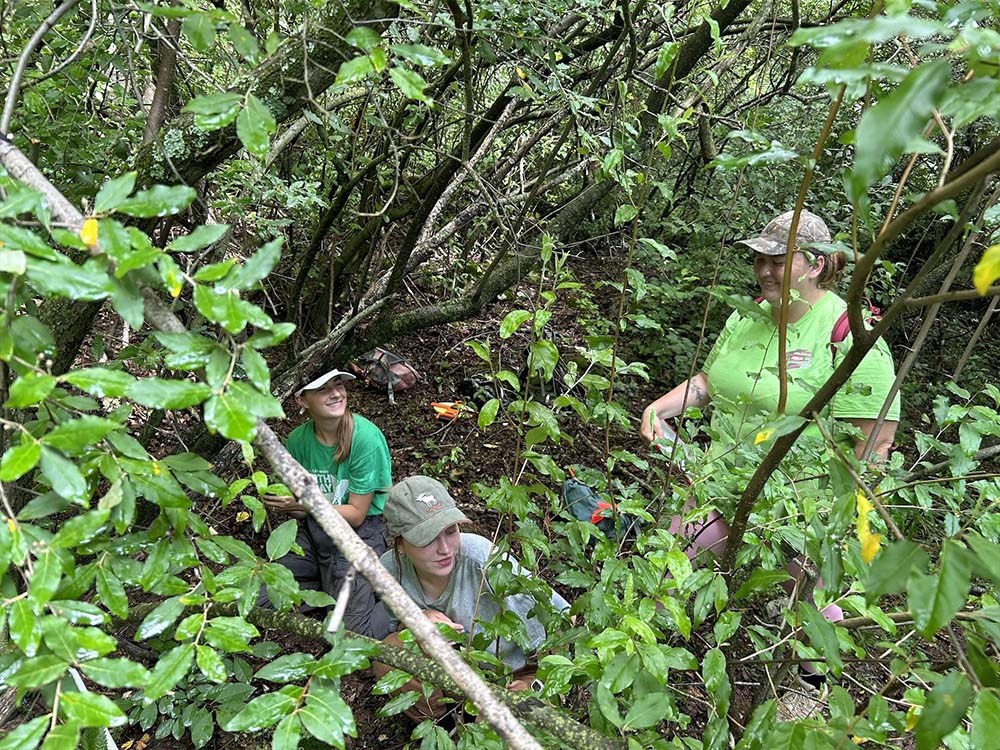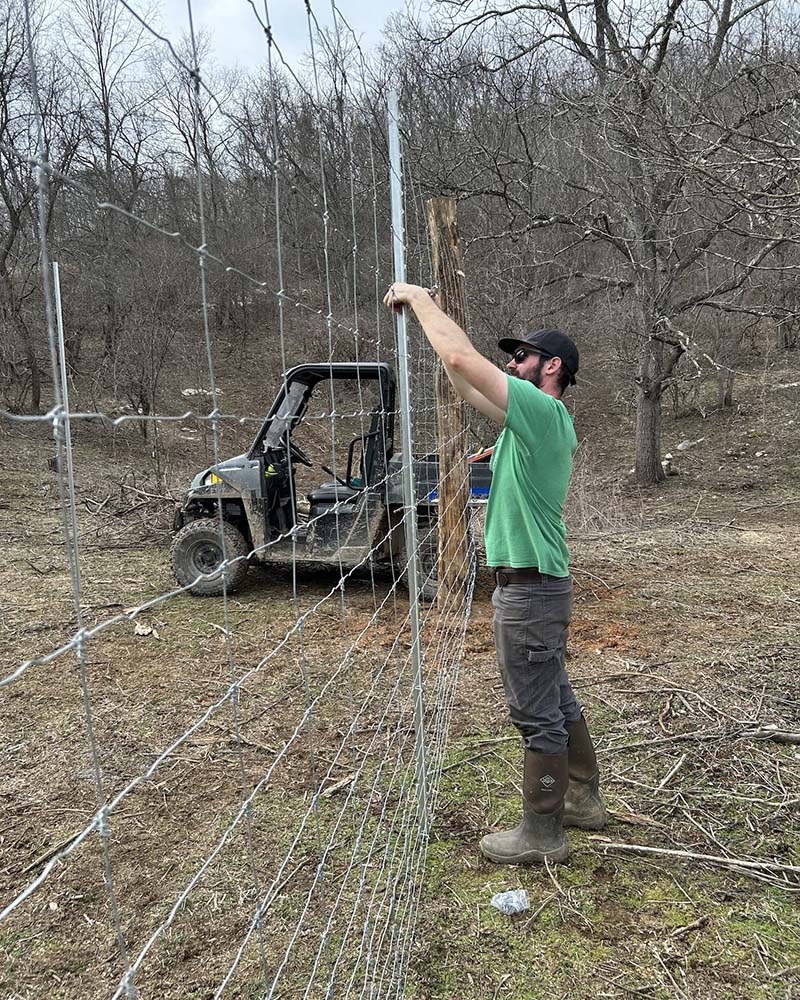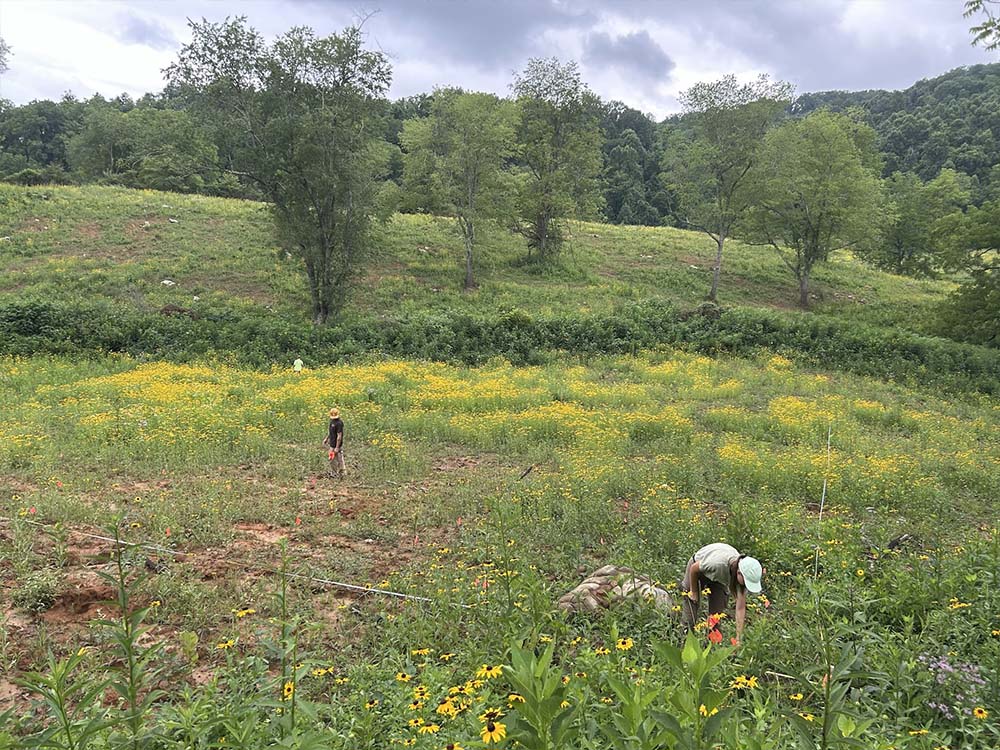
Our restoration work begins with understanding the landscape as a product of long-term interaction between people and the land. Across Greenbrier County, past agriculture, grazing, timber harvest, and land abandonment continue to shape forests and fields.
We use this understanding to guide practical, place-based restoration on our Wood Thrush Park and Kestrel Woods properties. Rather than trying to return landscapes to a single point in the past, we work within present conditions to manage invasive species, support native plant communities, and improve habitat. We monitor changes in vegetation, invasive species, and habitat structure over time using field-based observations and permanent sampling areas.
Wood Thrush Park serves as a demonstration site for restoration, education, and community engagement, while Kestrel Woods allows these approaches to be applied at a larger scale. Both properties support a broader effort to build a culture of stewardship across the region.
These observations guide future management, support long-term work across our properties, and contribute to our educational programming.
For more information, contact: Tom Saladyga
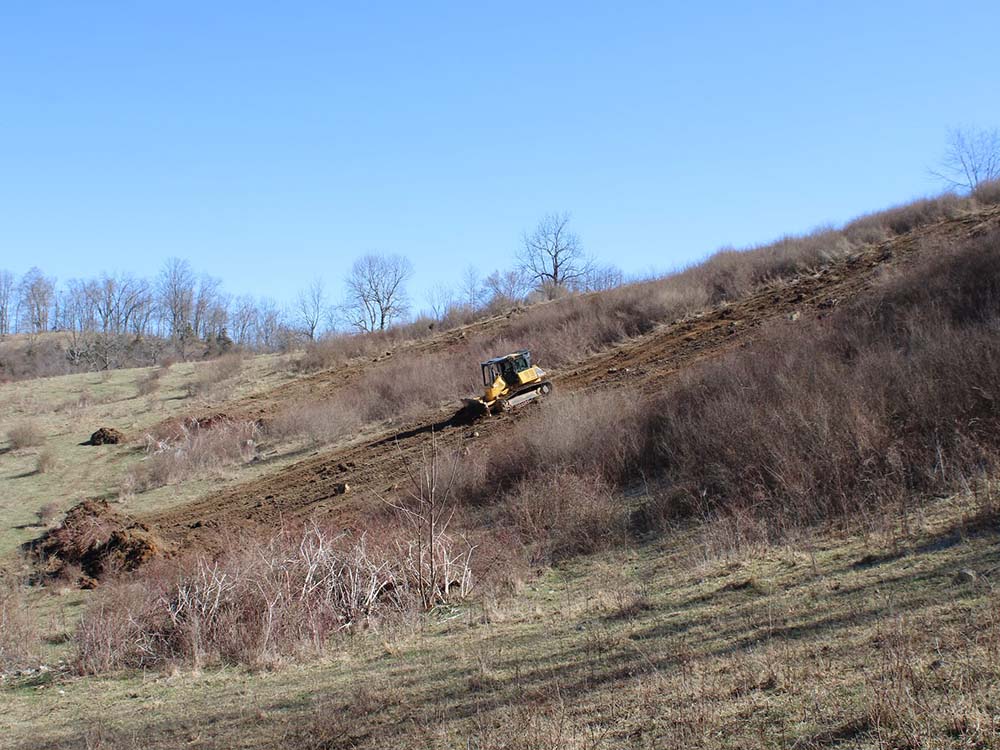
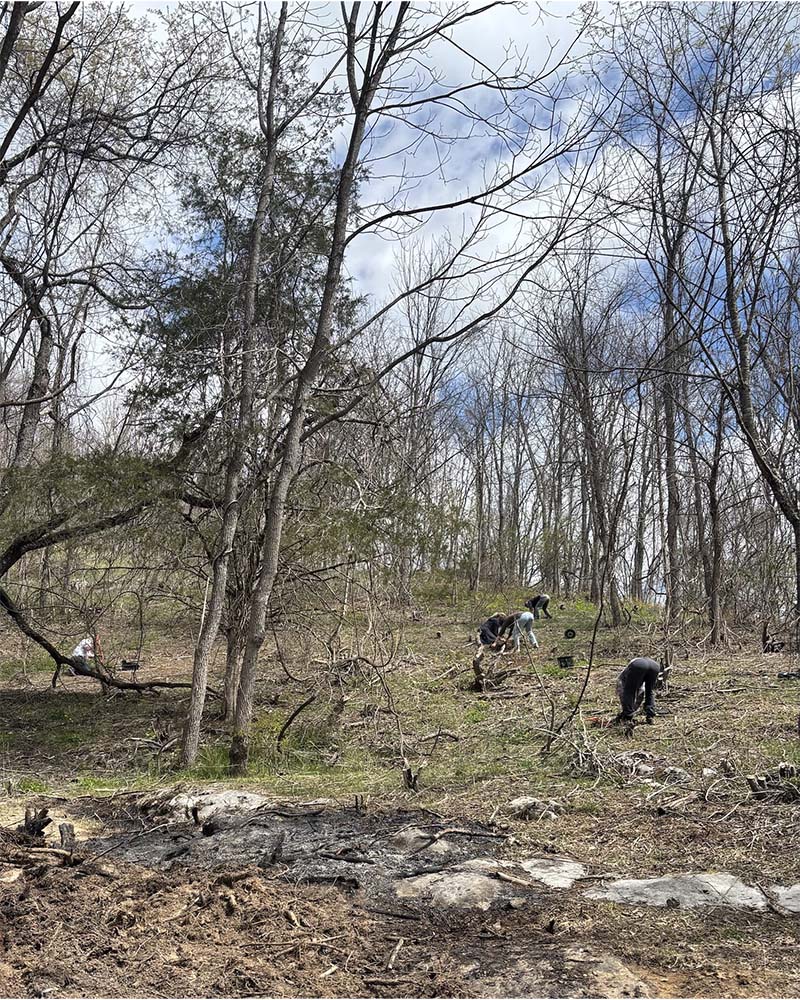
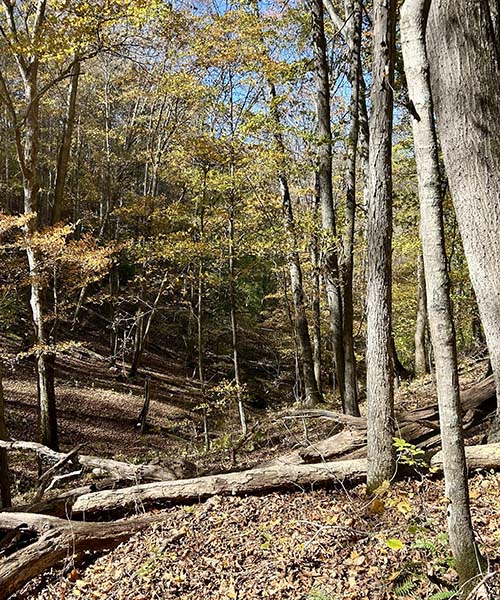
Wood Thrush Park is a nearly 500-acre post-agricultural property located about 6 miles west of Lewisburg, West Virginia. Since 2024, we have been working to improve ecological health and habitat quality across a mix of forests, woodlands, and meadows in several phases of regeneration and degradation. These efforts directly support our educational programs and outreach activities for various ages.
Some of our restoration and land management activities at Wood Thrush Park include:
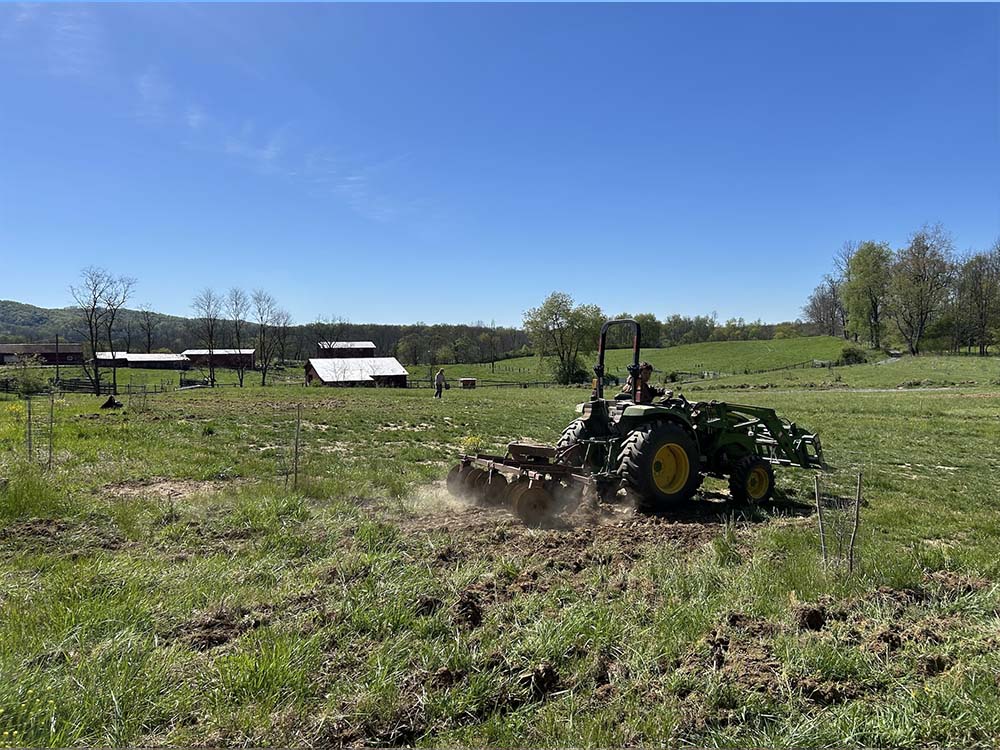
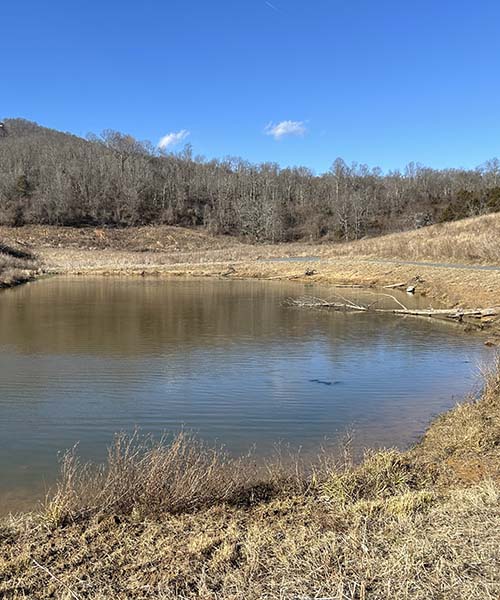
The Kestrel Woods property includes approximately 750 acres of early- to late- successional forests and 92 acres of former pasture. In April 2025, the previously grazed areas were planted with tens of thousands of trees in an effort to accelerate forest regeneration across the site. We are also improving the habitat quality of a former cattle pond through bank stabilization and revegetation, while monitoring wildlife across the property. Our restoration and land management efforts at Kestrel Woods include:
Appalachian Headwaters has managed or supported multiple large-scale reforestation efforts in the Central Appalachian Mountains:
Mammoth Preserve is a 5,000-acre former surface mine located midway between Charleston and Beckley. The site is now managed by West Virginia Land Trust and will offer opportunities for outdoor recreation and tourism development in the Kanawha Valley.
Sharps Knob, located in Pocahontas County, was once covered by high- elevation red spruce forests. Clear-cutting during the late-19th and early-20th centuries followed by surface mining in the 1970s decimated these forests and associated habitat of the West Virginia flying squirrel. Multiple partners continue working to improve site conditions through tree planting and habitat improvement projects.
Approximately 500 acres of formerly mined land within New River Gorge National Park and Preserve in Fayette County, West Virginia are being restored. This major restoration project led by the National Park Service involves multiple partners and will include invasive plant species removal and native tree plantings.
Below is a list of resources for landowners and anyone interested in learning more about restoration tools, practices, and programs. Make sure to follow us on social media or sign up for our newsletter to get the latest schedule of community events and workshops!
Pastures, Forests, and People: Land Use and Ecological Restoration in Greenbrier County, West Virginia (Local restoration context with references)
Virginia Tech Dendrology (Tree ID and Fact Sheets)
West Virginia Planting Tool (WV DNR resource for landowners)
WVU Soil Testing Lab (Free macronutrient analysis for WV landowners)
UDSA PLANTS Database (Information on vascular plants, mosses, liverworts, hornworts, and lichens of the U.S. and its territories)
USDA Web Soil Survey (Interactive soil mapping resource)
USDA National Invasive Species Information Center (State-specific resources)
WV DNR Non-native Invasive Species (General resource)
How to Deal With Invasives Without Making Them Worse (WVU Extension)
Guidelines for Control of Invasive Plants (Missouri Invasive Plant Taskforce)
West Virginia Conservation Agency (Programs and state conservation districts)
WVU Extension (Landowner resources)
WVSU Extension (Landowner resources)
Virginia Cooperative Extension (Landowner resources)
NRCS Landowner Programs and Initiatives (Financial support for landowners)